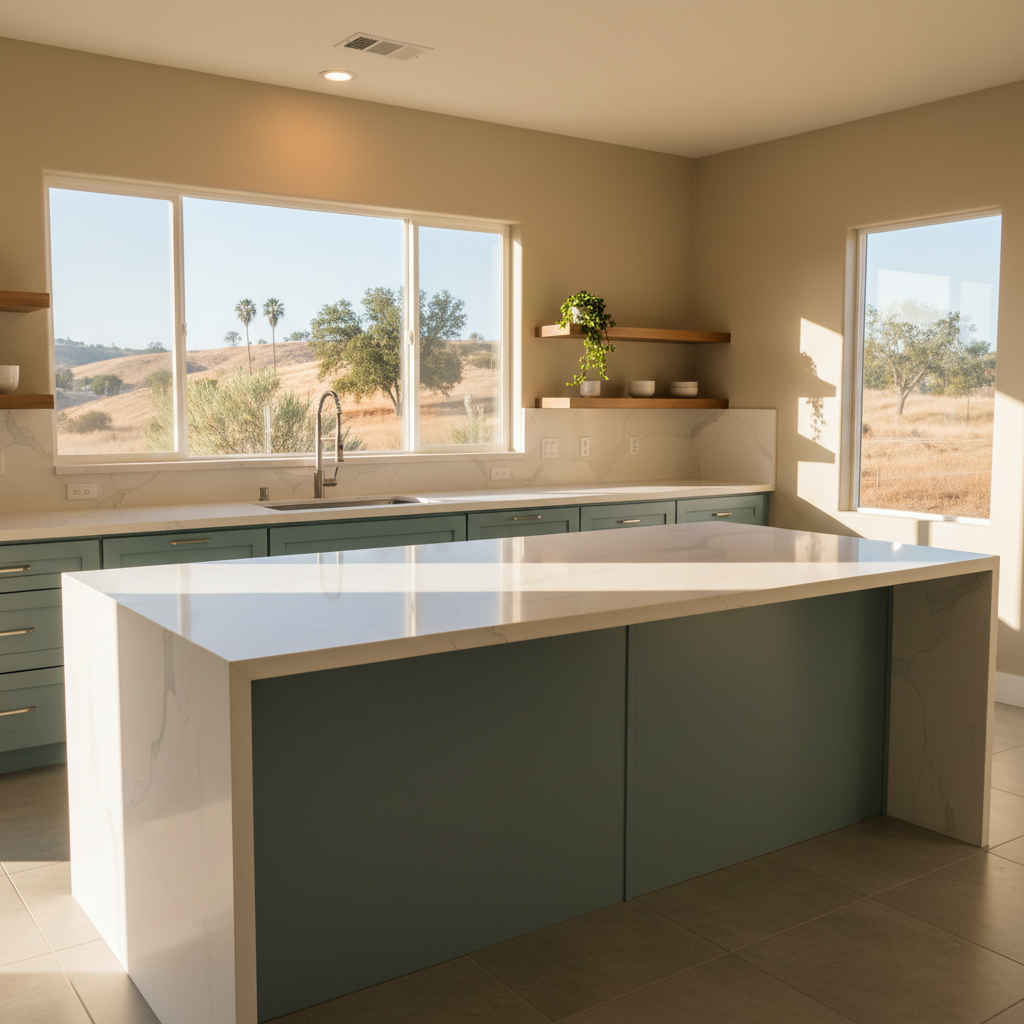
Alright, let's talk countertops. You're probably thinking about upgrading your kitchen, maybe you've already picked out some gorgeous quartz or a classic granite slab. That's fantastic! But before you jump in, we really need to chat about something a lot of folks miss: El Monte's weather and how it actually impacts your countertop installation.
When's the Best Time to Install Countertops in El Monte?
Honestly, you can put in countertops pretty much any time of year. But if you want to make life easier and get the best possible result, there are definitely better times. I've seen a lot over the years, working right here in El Monte, and here's what I've learned.
Late Spring (April-May): This is often just perfect. The weather's usually mild, not too hot, not too cold. It's before the serious summer heat kicks in, meaning less stress on materials during transport and installation. Plus, you're typically past the worst of our winter rains. The air is generally drier then, which helps adhesives and sealants cure just right.
Early Fall (September-October): Another sweet spot, for sure. The summer heat has started to back off, but we haven't hit the cooler, wetter months yet. Just like spring, you get those nice, temperate days that are ideal for this kind of work. Less humidity? That means a smoother process all around.
Now, can you do it in summer or winter? Absolutely. We do it constantly. You just need to be aware of a few things, that's all.
How El Monte's Weather Affects Your Countertop Project
Our climate here in El Monte, especially with those hot, dry summers and sometimes damp winters, plays a bigger part than you might imagine.
Summer Heat: When it's 90+ degrees outside, like it often is in July and August, things can get a bit tricky. Really high temperatures can mess with how certain adhesives and sealants cure. They might cure too fast, or not evenly. It also makes the work tougher for my crew, and trust me, you want a comfortable crew doing precision work like this. If we're cutting slabs right on site, the heat can affect the material itself, causing expansion and contraction that we have to manage carefully.
Winter Rain & Humidity: On the flip side, our winters, while not freezing, can bring some serious rain and higher humidity. If you live in one of those older homes near the Rio Hondo, you know exactly what I'm talking about — that dampness really gets into everything. High humidity can slow down the drying and curing process for adhesives and sealants. This isn't a disaster, but it means we might need a bit more time, or we'll have to use specific products designed for these conditions. Plus, moving large, heavy slabs when it's pouring rain? It's just a pain, and it ups the risk of slips or damage.
Dust and Air Quality: It's not just about temperature, you know. During our dry, windy periods, especially in late spring and fall, dust can become an issue. While we always take precautions to keep dust down during cutting and installation, too many airborne particles could potentially mess with pristine finishes if we don't handle it well. We're super careful about cleanup, but it's definitely something to think about.
Protecting Your Investment Year-Round
Once those beautiful new countertops are in, you want them to last, right? Here's how to keep them looking great, no matter what El Monte throws at them:
Sealing is Key (for natural stone): If you chose granite, marble, or another natural stone, regular sealing is absolutely crucial. Our dry summers can really pull moisture out of materials, and then the winter dampness tries to get in. A good sealant acts as a barrier. I usually tell folks to seal natural stone every 6-12 months, depending on how much use it gets. It's a simple process you can do yourself, or we're happy to help you out.
Avoid Extreme Temperature Changes: Don't put super hot pots directly on your countertops, especially if they're quartz or engineered stone. While they're tough, extreme thermal shock can cause damage over time. Always use trivets. This is especially true after a hot El Monte day when your kitchen might already be pretty warm.
Clean Up Spills Promptly: This goes for any countertop material. Acids from citrus, wine, or even some cleaning products can etch or stain, particularly on natural stone. Don't let spills sit, especially in our dry climate where they can just evaporate and leave concentrated residue.
Use Gentle Cleaners: Stick to pH-neutral cleaners. Harsh chemicals can strip sealants or damage the surface of your countertops. A little warm water and mild dish soap usually does the trick, honestly.
Choosing the right time for your countertop installation can make a real difference in the overall experience and how long your new kitchen lasts. We've been doing this for a long time here at El Monte Kitchen, and we're always happy to chat through the best options for your specific project and home. Give us a call, and let's get that dream kitchen happening.